A Landmark in Indian Construction
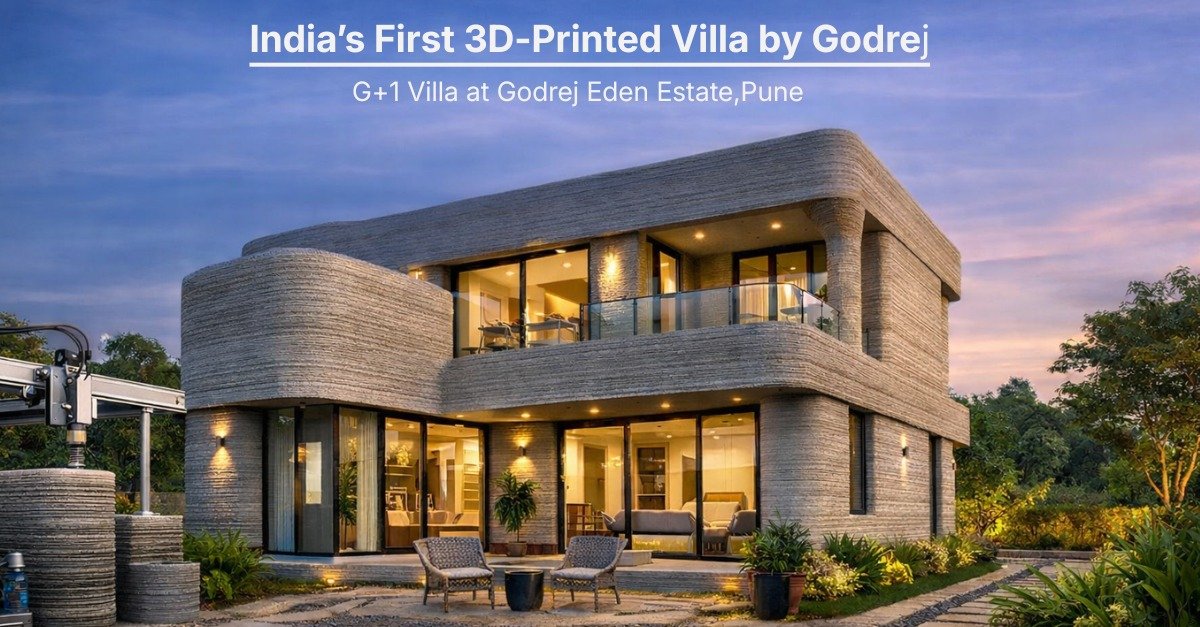
In a remarkable leap forward for real estate and technology, Godrej Properties introduced India’s first 3D-printed building — a G+1 villa located in the Godrej Eden Estate at Maan Hinjewadi, Pune. This pioneering project sets a new benchmark for sustainable and efficient construction practices in the Indian housing industry.
The Building: What Makes It Special
The structure is a ground plus one (G+1) villa spanning about 2,200 sq ft. Unlike traditional homes built using bricks and mortar, this villa was constructed layer by layer using advanced 3D printing technology. The method uses a specialized concrete printer that deposits material precisely according to computer-generated 3D designs — transforming digital architecture directly into physical form on site.
This innovative process offers several advantages:
- Faster Construction: The villa was completed within just four months, a timeline significantly shorter than conventional building methods.
- Reduced Waste and Costs: 3D printing minimizes material waste and decreases labor intensity by removing the need for extensive formwork and manual bricklaying.
- Sustainability: The technology allows the use of recycled materials in the concrete mix, improving eco-friendliness and lowering environmental impact.
Improved Insulation: The printed walls offer better thermal insulation, which contributes to indoor comfort and energy efficiency.
Design and Architectural Highlights
The villa represents more than just construction speed — it blends creative design with functional living:
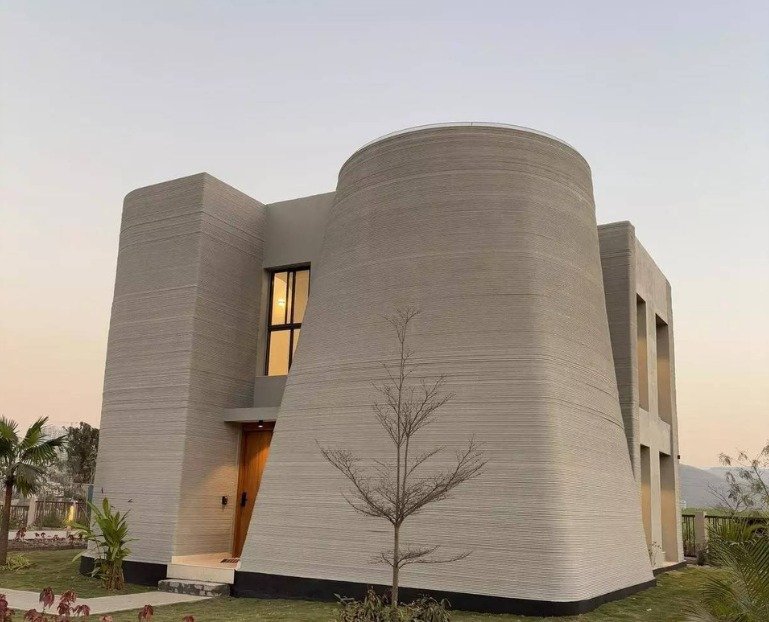
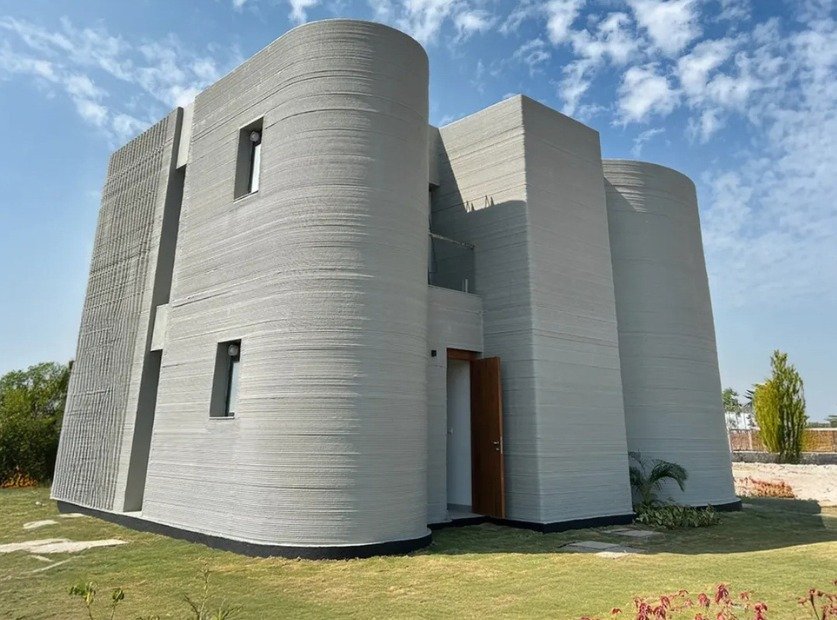
- Organic and fluid architectural form crafted through algorithm-driven design.
- Natural light optimization through strategic planning of openings and facades.
- Sculptural interior elements replace traditional features, adding artistic flair to the living spaces.
- Futuristic exterior texture is characteristic of additive manufacturing aesthetics.
Technology & Collaboration
This breakthrough was achieved through a collaboration between Godrej Properties Ltd and Tvasta Engineering, a deep tech startup founded by IIT Madras alumni. Tvasta’s concrete 3D printing system was deployed on site, showcasing how automation and digital manufacturing can be integrated into mainstream residential construction.
What This Means for the Future
The successful completion of this villa signals a transformative shift in Indian construction. 3D printing holds the potential to:
- Accelerate building times for residential and commercial projects.
- Reduce construction-related emissions and resource use.
- Enable cost-effective housing solutions in urban and rural settings.
Inspire innovative architectural expressions and customized designs.
By adopting this method, Godrej Properties is driving forward a vision of smarter, greener, and more efficient building practices that could influence future real estate projects across India.