
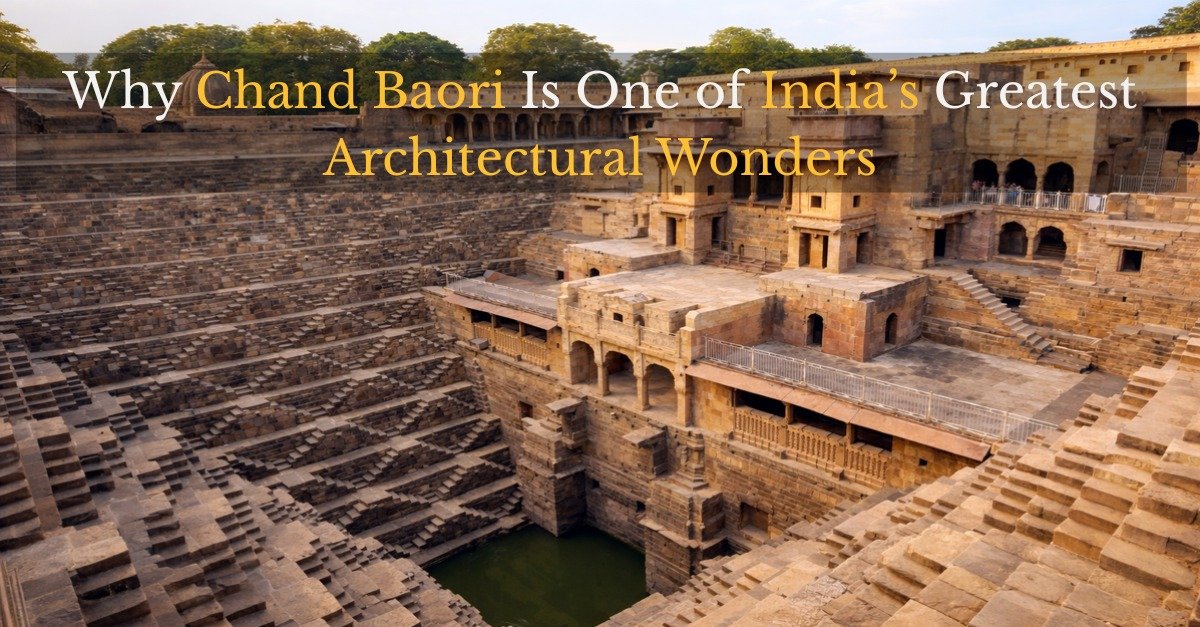
Why Chand Baori Is One of India’s Greatest Architectural Wonders
Hidden in the quiet village of Abhaneri, Rajasthan, lies a structure so visually striking and architecturally advanced that it feels almost unreal—Chand Baori, one of the deepest and largest stepwells in the world.
More than just a water structure, Chand Baori is a masterclass in geometry, climate-responsive design, and ancient Indian engineering. Long before modern sustainability concepts existed, this stepwell proved how architecture could work with nature, not against it.
Where Is Chand Baori Located?
Chand Baori is located in Abhaneri village, about 95 km from Jaipur, Rajasthan.
The region is hot, dry, and prone to water scarcity—making stepwells an essential part of life and urban planning.
When and Why Was Chand Baori Built?
- Built by: King Chanda of the Nikumbh dynasty
- Period: 8th–9th century AD
- Primary purpose: Water storage + community space
Unlike decorative monuments, Chand Baori was built for function first, with beauty emerging naturally from its intelligent design.
Architectural Design & Geometry
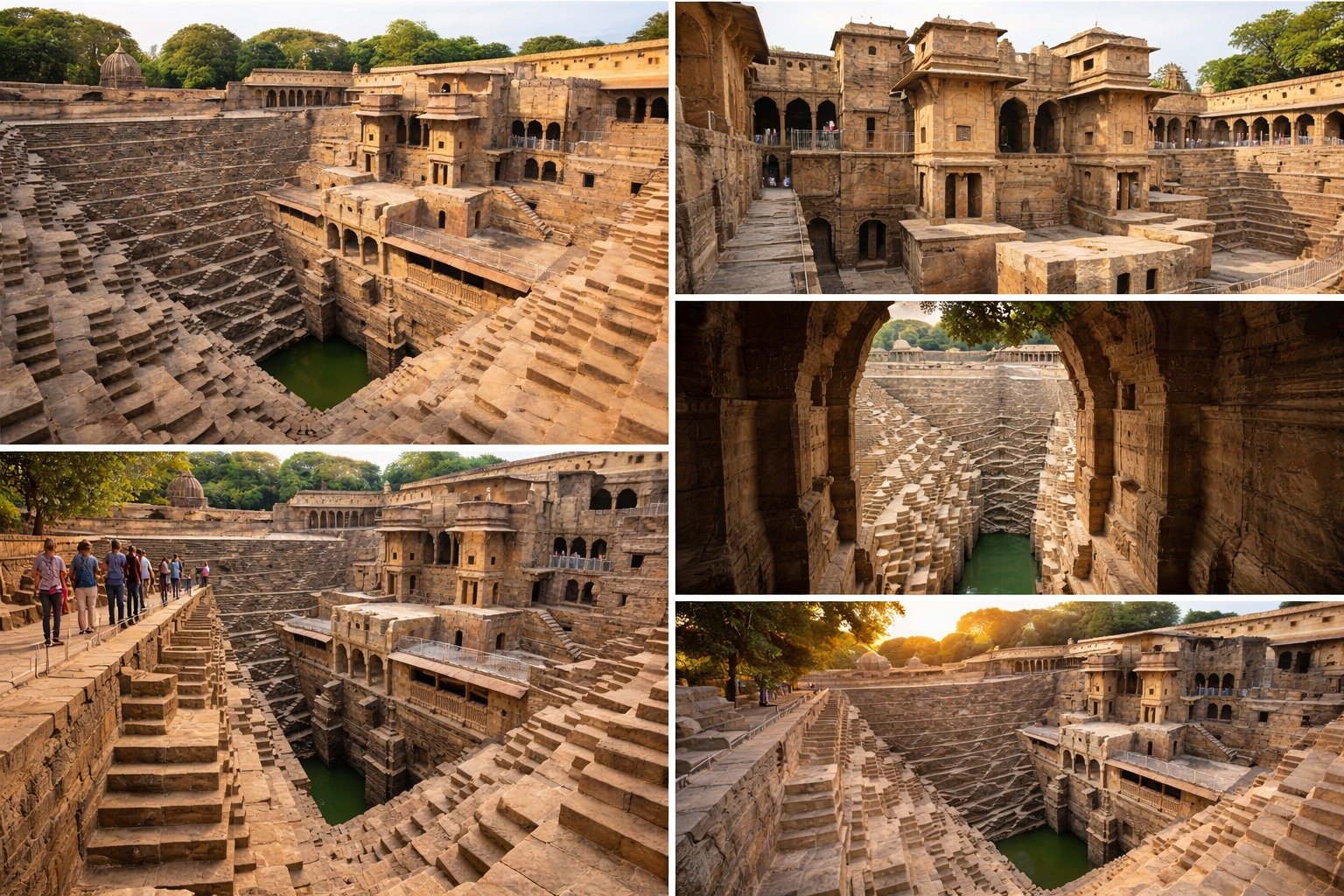
Chand Baori descends 13 storeys deep and contains around 3,500 perfectly symmetrical steps arranged in a precise geometric pattern.
Key architectural highlights:
- Square plan
- Repeating zigzag staircases on three sides
- One side reserved for royal pavilions and rituals
- Strong sense of rhythm, repetition, and proportion
From above, the stepwell looks like a hypnotic fractal, demonstrating advanced spatial thinking centuries ahead of its time.
Climate-Responsive Architecture
One of Chand Baori’s greatest architectural achievements is its passive cooling design.
- Temperatures inside the stepwell can be 5–6°C cooler than the surface
- Deep excavation protects water from evaporation
- Stone mass helps regulate heat
This made Chand Baori not only a water source but also a cool retreat during extreme summers—a concept modern architects now rediscover as passive design.
Water Architecture & Sustainability
Chand Baori functioned as:
- Rainwater harvesting system
- Groundwater recharge structure
- Public utility for drinking, washing, and rituals
Without pumps, electricity, or concrete, the structure sustained communities for centuries—making it a powerful example of sustainable architecture rooted in local knowledge.
Cultural & Social Role
Stepwells were more than infrastructure:
- Centers of social interaction
- Spaces for religious rituals
- Places for rest and community gatherings
Chand Baori was located near the Harshat Mata Temple, reinforcing the connection between water, spirituality, and architecture in Indian tradition.
Fascinating Facts About Chand Baori
- One of the deepest stepwells in the world
- Inspired scenes in films and documentaries
- No two steps are exactly the same perspective-wise
- Designed without modern measuring tools
- Built entirely with local stone
Lessons for Modern Architecture
Chand Baori teaches architects and designers:
- Respect local climate
- Design for function first
- Use geometry to create beauty
- Think long-term sustainability
In an era of glass façades and energy-heavy buildings, Chand Baori reminds us that true innovation often lies in the past.
Conclusion
Chand Baori is not just an ancient stepwell—it is a timeless architectural lesson carved into the earth. It proves that great architecture doesn’t always rise upward. Sometimes, it goes deep, quietly solving problems while creating unforgettable beauty. For architects, students, and designers, Chand Baori is not history—it’s inspiration.