Not all BIM institutes are equal.
Some just teach software… while others actually prepare you for the real industry.
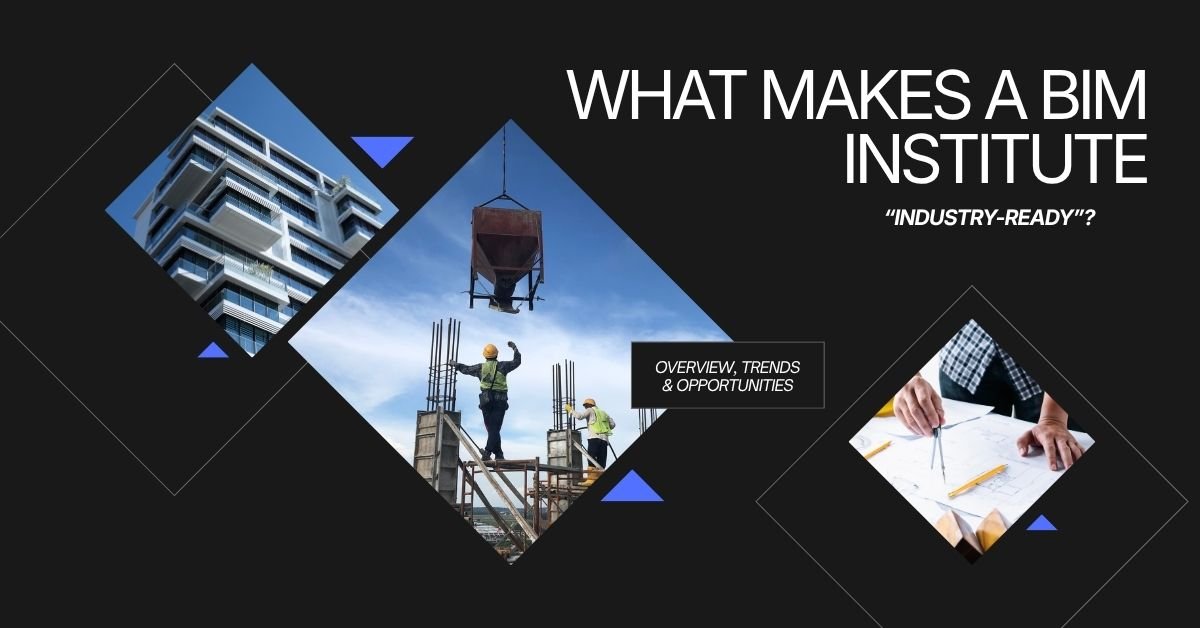
So the real question is: what makes a BIM institute “industry-ready”?
Because if your goal is a job, then choosing an industry-ready BIM institute can literally decide your career path.
In this blog, I’ll break down the exact factors that separate average institutes from truly job-oriented ones.

What Does “Industry-Ready” Actually Mean?
Before evaluating an industry-ready BIM institute, let’s understand the term.
An institute is “industry-ready” if it:
- Teaches real-world workflows (not just tools)
- Provides practical exposure
- Prepares you for actual job roles
- Helps you transition from student → professional
Basically, you should be able to start working from Day 1 in a company.
1. Real Project-Based Training (MOST IMPORTANT)
The biggest sign of an industry-ready BIM institute is real project exposure.
What to look for:
- Residential + commercial projects
- 2D to 3D modeling
- MEP coordination
- Clash detection reports
Tools used:
- Autodesk Revit
- Navisworks
Why this matters:
Companies don’t hire based on certificates — they hire based on what you can do.
2. Focus on BIM Workflow (Not Just Software)
Many institutes claim to be advanced but only teach buttons.
A true industry-ready BIM institute will teach:
- LOD (Level of Development)
- BIM Execution Plan (BEP)
- Coordination workflow
- Documentation standards
Example:
Instead of:
“Learn Revit tools”
They teach:
“How to deliver a BIM project from start to finish”
3. Experienced Trainers from Industry
This is a deal-breaker.
An industry-ready BIM institute must have trainers who:
- Have worked on real projects
- Understand industry challenges
- Share practical insights
Red Flag 🚩
- Trainers with only teaching experience
- No real project background
4. Strong Portfolio Development Support
If an institute doesn’t help you build a portfolio, it’s not industry-ready.
What your portfolio should include:
- 3–5 complete BIM projects
- Drawings + sheets
- Coordination models
- Visual presentations
A proper industry-ready BIM institute will guide you step-by-step.
5. Placement Assistance & Industry Connections
Let’s be honest — most students care about jobs.
An industry-ready BIM institute provides:
- Placement drives
- Interview preparation
- Resume building
- Industry tie-ups
Bonus:
Institutes connected with real companies give faster placement.
6. Updated Curriculum (Not Outdated)
The BIM industry evolves fast.
An industry-ready BIM institute updates its syllabus regularly.
Must include:
- Latest software versions
- Coordination workflows
- Real project standards
If they’re still teaching outdated methods — avoid.
7. Hands-On Practice & Lab Access
Practice is everything.
An industry-ready BIM institute ensures:
- Daily practice sessions
- Lab access
- Trainer supervision
Because BIM is not theory — it’s execution.
8. Specialization Options
Top institutes don’t just teach basics — they offer specialization.
Options include:
- Architecture BIM
- Structure BIM
- MEP BIM (high demand)
A good industry-ready BIM institute helps you choose the right path.
9. Soft Skills & Interview Preparation
Technical skills alone won’t get you hired.
An industry-ready BIM institute also trains you in:
- Communication
- Interview handling
- Presentation skills
Why this matters:
Even skilled students fail interviews due to poor communication.
10. Student Results & Reviews
Always check past results.
A genuine industry-ready BIM institute will have:
- Placement records
- Student testimonials
- Project samples
Pro Tip:
Don’t trust only marketing — ask for proof.
Real-World Insight (Most Important)
Here’s the honest truth:
Not every institute that says “placement guaranteed” is an industry-ready BIM institute.
You should always check:
- Are they teaching workflow or just tools?
- Do they provide real projects?
- Do students actually get jobs?
Because marketing ≠ reality.
Conclusion
So, what makes an industry-ready BIM institute?
It’s not just about teaching software.
It’s about:
- Real projects
- Industry workflow
- Strong portfolio
- Placement support
- Experienced trainers
If an institute checks all these boxes, you’re on the right path.
Because in the end, your goal isn’t just learning BIM —
it’s getting hired and growing in the industry.